
Operating a business with a unionized workforce adds a layer of rules to your daily management tasks. You aren’t just following general labor laws anymore. Instead, you have a specific rulebook that tells you how to handle almost every staff interaction.
It is normal for leaders to feel a bit stressed by these documents. One paragraph can change your whole budget or how you schedule shifts. Keeping up with these details is a full-time job on its own.
If you manage these rules well, it creates a stable environment. When everyone knows the expectations, your company can stay productive as well as profitable. The key to avoiding surprises is to get the details right from the start.

Most people in the industry call a union contract a Collective Bargaining Agreement or a CBA. This is a legally binding deal between your company and the union that speaks for your employees. Because it is a legally binding agreement, neither party can unilaterally change its terms during the life of the contract without mutual consent, making it a critical anchor for business planning.
The document covers everything from what people earn to the rights they have on the job. It acts as the final word on wages, conditions, and workplace safety. The contract provides a level of predictability in labor costs and workplace conduct that is essential for long-term operational success.

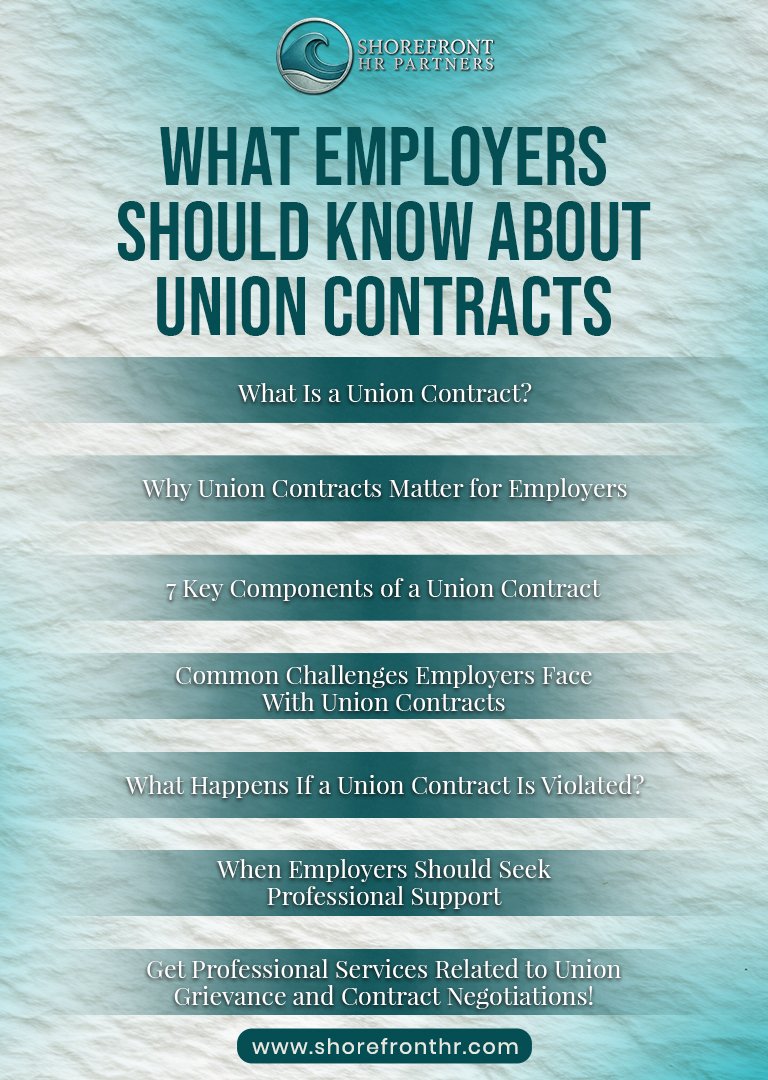
Why Union Contracts Matter for Employers
The union contract serves as the manual for your labor costs and your operational limits. If you miss a detail, you might face heavy fines or a sudden stop in work.
- Legal obligations
- Operational impact
- Workforce expectations
- Risk management

7 Key Components of a Union Contract
Knowing the core parts of your agreement helps you manage your team without stepping out of line. These sections provide the structure for your entire staff relationship.
- Wages and compensation structure: This section outlines the specific pay scales, annual raises, and premium pay rates for different job levels.
- Benefits (healthcare, leave, retirement): These clauses detail what the employees get beyond wages.
- Work hours and overtime rules: This defines the standard workweek, how overtime is assigned, and the rates for holiday or weekend work.
- Job roles and classifications: It places every worker into a specific group with a set list of duties to prevent “work out of classification” disputes.
- Grievance and dispute procedures: This sets a step-by-step process for employees to lodge complaints regarding contract violations and how, as management, you must respond.
- Disciplinary processes: It establishes the exact steps needed before you can suspend or fire a staff member.
- Contract duration and renewal terms: This tells you when the current deal ends, plus how to start the next one.
Common Challenges Employers Face With Union Contracts
Running a company within these lines can be tough when you need to change things quickly. Many managers find it hard to stay agile while following strict rules.
- Interpreting complex contract language
- Managing grievances
- Maintaining flexibility
- Handling disputes and negotiations
What Happens If a Union Contract Is Violated?
Breaking the rules of union contracts leads to serious trouble. A simple error in pay or scheduling can trigger a chain of events that takes control away from your hands.
- Formal grievances
- Arbitration
- Legal consequences
- Workplace disruption

When Employers Should Seek Professional Support
You don’t need to be an expert in every line of labor law. Bringing in help ensures your business stays protected and professional during every interaction.
- During contract negotiations, get an expert to help you set the rules for the next few years.
- When handling grievances, use a partner to respond to worker complaints in a way that guards your rights.
- If disputes escalate, reach out for help before an argument turns into a full legal case.
- When interpreting complex clauses, ask a professional to verify what a specific rule means for your daily operations.

Get Professional Services Related to Union Grievance and Contract Negotiations!
Shorefront HR Partners knows how to handle the pressures of managing a unionized team. We look at the details and handle the tough talks to keep your company moving forward. Our specialized union grievance and contract negotiation services can provide you with the peace of mind and professional expertise you deserve.
Don’t wait for a labor dispute to compromise your business objectives. Contact us today and let us handle the complexities of labor relations so you can focus on leading your company toward a successful future.
Frequently Asked Questions
What is the difference between a grievance and a standard HR complaint?
A grievance is a formal allegation that the employer has violated a specific clause of the union contract. It follows a strictly defined legal process involving union representatives. A standard HR complaint typically involves issues outside the contract, such as interpersonal conflicts or company policies not covered by the CBA.
How long do union contracts last?
Most union contracts are effective for three to five years.
What happens if the union and employer reach an “impasse”?
At the point of impasse, the employer unilaterally implements its “last, best, and final offer,” and the union may choose to strike or seek federal mediation.
What is the primary purpose of a union contract?
To establish operational stability, predictability, and labor peace by defining clear, legally binding terms of employment that prevent arbitrary employee actions and limit disruptions.